The CSR Newsletters are a freely-available resource generated as a dynamic complement to the textbook, Strategic Corporate Social Responsibility: Sustainable Value Creation.

To sign-up to receive the CSR Newsletters regularly during the fall and spring academic semesters, e-mail author David Chandler at david.chandler@ucdenver.edu.

Tuesday, October 25, 2022

Strategic CSR - Trade unions

The article in the url below focuses on the recent increase in unionization in the U.S. It also explains why, this time, it is different than in previous eras of stronger labor rights:

"Christian Smalls and Jaz Brisack have lived very different lives. Mr Smalls started out as a rapper and worked in a series of jobs in retail before joining Amazon as a warehouse picker in 2015. He was fired in 2020 for leading a staff walkout, and he went on to found the Amazon Labour Union (ALU). Ms Brisack won a Rhodes scholarship to the University of Oxford, then moved to Buffalo, New York, to work on a union campaign, but soon took a job at Starbucks. Eight months later she helped to found Starbucks Workers United (SBWU). Despite their different routes, Mr Smalls and Ms Brisack are the faces of America's changing labour movement."

Specifically, the unions these advocates are creating are specific to a single company, rather than being industry-wide. That is, the union for Amazon workers is called the "Amazon Labour Union," while the union for Starbucks workers is called "Starbucks Workers United." Both are making headway, although the ALU less so than SBWU, which is also now facing a coordinated backlash from Howard Schultz in his return to the company:

"Their names tell the story. Older unions have often had long names that describe their sectors – sometimes a mouthful (such as the Paper, Allied-Industrial, Chemical and Energy Workers International Union). This reflected their ambition. They wanted to win collective agreements covering all workers in an industry, to drive up wages and improve conditions across the board. But new unions are shunning complex monikers and using company names instead, such as Target Workers Unite (founded in 2018)."

This seems like a good approach on the part of these latent organizations. Having grown up in Britain in the 1980s with Margaret Thatcher as the Prime Minister, I have the idea of 'corrupt' labor unions running an industry into the ground (specifically the coal miners, but also other industries, such as steel or ship-building – all industries that used to be central to the UK economy). Similar patterns emerged in the automobile industry here in the U.S. In spite of this, since I also believe that a firm's employees are its most important stakeholder, the idea of an avenue of communication between management and workforce is essential. My instinct is that such 'worker councils' would be location based (i.e., a specific factory or workplace), but for firms with many locations, this emerging trend seems like a reasonable compromise:

"However it is not plain sailing. On May 2nd Amazon workers at LDJ5 warehouse, in New York, voted against forming a union. And the SWBU may have unionized 80 cafes but there are some 15,500 Starbucks outlets in America."

None of this is to say I support the unionization efforts, and Schultz's response at Starbucks suggests their efforts may win advances for their non-unionized co-workers, while not receiving those gains themselves. Ideally, in a world where management values employees, and employees appreciate the gains they are granted (perhaps, the way that Starbucks used to be), a union should be unnecessary. In those companies where employees are taken-for-granted (Amazon and perhaps the Starbucks of recent years), such unionization efforts are a good example of employees acting to hold management to account. In short, if management wants to avoid unions, they need to demonstrate that employees are the firm's most important stakeholders, and back it up with meaningful action.

Take care
David

David Chandler
© Sage Publications, 2023

Instructor Teaching and Student Study Site: https://study.sagepub.com/chandler6e 
Strategic CSR Simulation: http://www.strategiccsrsim.com/
The library of CSR Newsletters are archived at: https://strategiccsr-sage.blogspot.com/


The name game
May 28, 2022
The Economist
Late Edition – Final
22
 

Thursday, October 20, 2022

Strategic CSR - 6e IMs

Today's newsletter is to let you know that the sixth edition of Strategic Corporate Social Responsibility: Sustainable Value Creation is now published. Review copies are available on the book's website: https://us.sagepub.com/en-us/nam/strategic-corporate-social-responsibility/book278406

In addition to all the new and updated content, Sage has released updated instructor resources to accompany this edition. These support resources are available online (https://study.sagepub.com/chandler6e) and include materials for both instructors (password protected) and students:

Instructors
  • Answers to in-text questions
  • PowerPoint slides
  • Test bank
  • Lecture notes (including suggested answers to chapter discussion questions and Strategic CSR debate motions)
  • Sample syllabi

Students

In addition:

NEW TO THIS EDITION:
  • Updated examples around COVID-19, BLM, the supply chain crunch, and the great resignation have been added.
  • A significantly revised case study on Media has been re-written to reflect the latest updates in social media, including the Facebook/Meta rebrand.
  • New chapter learning objectives appear at the beginning of each chapter.
  • 22 new figures have been added to help visual learners understand complex concepts.

KEY FEATURES:

  • Unique perspective analyzes CSR from a legal, behavioral, strategic, and sustainable perspectives.
  • Redefines CSR as central to the value-creating purpose of the firm and unpacks how firms get improve the implantation of strategic CSR practices.
  • Case studies illustrate how CSR affects all aspects of a firm's operations and include examples from corporations such as Facebook and Starbucks.
  • Each of the book's 12 chapters and five cases include a Strategic CSR Debate Motion, as well as five Questions for Discussion and Review, that bring the scope and complexity of CSR to life in the classroom.
  • An international perspective, supported by multiple examples, emphasizes the multi-cultural challenges of CSR and conducting business in a global context.    

Of course, if you have any questions about the 6e, please feel free to contact me at any time.

Take care
David

David Chandler
© Sage Publications, 2023

Instructor Teaching and Student Study Site: https://study.sagepub.com/chandler6e 
Strategic CSR Simulation: http://www.strategiccsrsim.com/
The library of CSR Newsletters are archived at: https://strategiccsr-sage.blogspot.com/

Tuesday, October 18, 2022

Strategic CSR - Rights + responsibilities

Over the years, I have read many articles arguing that legal rights should be granted to animals and other natural entities, like rivers (e.g., see Strategic CSR – Personhood and Strategic CSR – Cats and dogs). The article in the url below is merely the most recent of those articles but, very usefully, it references the original source for such arguments (in the U.S., at least):

"The notion that 'natural objects' like woods and streams should have rights was first put forward half a century ago, by Christopher Stone, a law professor at the University of Southern California."

The logic advocates use to support their claims vary to some degree, but almost all, at some point, make this point:

"In April, 1972, the Supreme Court upheld the appellate court's decision against the Sierra Club, by a vote of four to three. (Two seats on the Court were vacant.) Douglas, drawing heavily on Stone's article, penned a dissenting opinion. 'A ship has a legal personality, a fiction found useful for maritime purposes,' he wrote. A corporation, too, 'is a person for purposes of the adjudicatory processes. . . . So it should be as respects valleys, alpine meadows, rivers, lakes, estuaries, beaches, ridges, groves of trees, swampland, or even air that feels the destructive pressures of modern technology and modern life.'"

In essence, 'if corporations can be persons and they are unable to talk (and do other people-like things), then other things that are unable to talk should also be persons.' In other words:

"The objection that streams and forests cannot have standing because streams and forests cannot speak was, in Stone's view, easily addressed. 'Corporations cannot speak either,' he observed. 'Nor can states, estates, infants, incompetents, municipalities or universities.' And yet these entities were amply represented—some might say overrepresented—in the courts."

But, as many CSR advocates also like to argue, with rights come responsibilities. And, one of the many advantages of granting personhood to corporations (and it really is the foundational pillar of our economic system, post industrial revolution, primarily because it permits limited liability) is that, although corporations can sue others, as persons they can also be sued themselves.

To me, this seems like a major argument against granting legal rights to animals and elements of the natural environment. If I am currently out walking my dog and it bites someone else, the victim does not sue the dog, they sue me. There would not be much point suing the dog, since the dog does not own any assets from which compensation could be paid. Equally, if I go swimming in a river and drown due to the strong currents (which would be the river's fault, now that we are assigning rights to it), then it is not much use to me (or my estate) to sue the river. The enforcement of contracts is not everything in our economic/legal/societal system, but it is a hell of a lot.

So, while there are increasing numbers of cases where advocates act on behalf of animals and the natural environment to sue for legal standing (most recently here in the U.S., Happy the elephant), I think this would create more problems than it solves. Again, pursuing the argument that responsibilities are the flipside of rights, I think we need to solve how we are going to assign responsibilities to these actors before we rush to grant them rights (especially because, in general, they have no discernible interests that we can understand or meet).

Take care
David

David Chandler
© Sage Publications, 2023

Instructor Teaching and Student Study Site: https://study.sagepub.com/chandler6e 
Strategic CSR Simulation: http://www.strategiccsrsim.com/
The library of CSR Newsletters are archived at: https://strategiccsr-sage.blogspot.com/


A Lake in Florida is Suing to Protect Itself
By Elizabeth Kolbert
April 11, 2022
The New Yorker
 

Thursday, October 13, 2022

Strategic CSR - MBAs

The article in the url below reports on recent research examining the effects on firms in the U.S. and Denmark following the appointment of a CEO with an MBA. The results are not encouraging. While the researchers find that profits (specifically, return on assets) increase over the subsequent five years, it is not because the CEOs are necessarily making their organization either more profitable, or more effective:

"The authors look at newly appointed CEOs in America and Denmark. They find those with MBAs increase returns on assets in the five years after their appointment—by a total of three percentage points on average in America and 1.5 points in Denmark. But that is not because they boost sales, ratchet up investments or raise productivity. Rather, the higher returns are the result of suppressing workers' wages, which fall by 6% in America and 3% in Denmark over the five years after an MBA takes charge. In short, ushering MBAs into corner offices seems to boost shareholder value by slicing the pie in certain ways, not by making the pie bigger."

The researchers place the blame for this effect squarely on business schools:

"The researchers put this phenomenon down to change in business-school syllabuses. MBA programmes, [say the researchers], have over the years grown less focused on technical aspects of finance and management, and more obsessed with maximising shareholder value and corporate leanness. The result [they] contend, is that workers have increasingly been seen as 'costs to be reduced' rather than an investment in human capital."

This fits with my sense of a drift in the purpose of business schools over the last 50 years, or so. There was a time in the U.S. when the role of manager was being talked about in terms of becoming a profession, like a doctor or an architect (see Strategic CSR – A professional). This was when business schools were spreading throughout universities (post WWII) and were being designed to play a central role as gatekeeper in determining who could call themselves a manager (and the MBA degree was going to be the required certification – a license, if you will).

Clearly, that didn't happen, although there is still value for business schools in claiming to be a professional school in the university (as demonstrated by the insistence on marketing "Professional MBA" programs – a great example of deceptive advertising). Instead, we lost that broader educational purpose and, instead, seemingly have dissolved into training as many business students as possible. This is no doubt partly because it is easier to train (than to educate), but also partly because revenue generation has become the primary driver of activity – it turns out that business school faculty enjoy their (relatively) higher salaries.

In short, we have shifted from an emphasis on quality to an emphasis on quantity, and the consequences for the business world (and broader society) have been immense (e.g., see here). In terms of business schools, the result is a loss of the essence of what it means to be a manager/leader. I have recently taken over as director of the Executive MBA program at our school and would like to use the position to try and get back to this core, where what it means fundamentally to be a manager (what it means to manage) is central to a business student's degree.


The research cited in this newsletter was also covered in depth recently on the Freakonomics podcast: https://freakonomics.com/podcast/are-m-b-a-s-to-blame-for-wage-stagnation/

Take care
David

David Chandler
© Sage Publications, 2023

Instructor Teaching and Student Study Site: https://study.sagepub.com/chandler6e
Strategic CSR Simulation: http://www.strategiccsrsim.com/
The library of CSR Newsletters are archived at: https://strategiccsr-sage.blogspot.com/


Degrees of unconcern
April 9, 2022
The Economist
Late Edition – Final
51

Tuesday, October 11, 2022

Strategic CSR - EVs

The article in the url below makes the argument that, due to subsidies being offered by the U.S. government, finding an EV to buy is challenging, at present:

"The landmark US climate bill passed [over the summer] … includes a $7,500 point-of-sale tax credit for any purchase of a qualifying new EV, and $4,000 off the purchase of a used one. But the bill doesn't solve for one of the biggest challenges facing interested buyers: inventory. It's terribly difficult to get a new electric car these days. In a recent survey of thousands of EV owners for Bloomberg Green's Electric Car Ratings, respondents said they waited almost seven months, on average, for their battery-powered vehicle."

This constrained market is presenting opportunities for innovation. In particular, companies are beginning to explore the market potential for car subscriptions (rather than purchases):

"What if you could simply subscribe to a car like a 5,000-pound magazine? That's the future being sold by Autonomy, a California-based startup that since January has been targeting a narrow niche on the EV ownership spectrum, somewhere between the Hertz rental counter and a three-year lease. 'We exist to expand the adoption of electric vehicles," reads Autonomy's pitch, 'and we don't think you should be forced to accept expensive, long-term debt to drive one.' Autonomy is now stocking up on EVs from pretty much every company that makes them: This week, it announced plans to order nearly 23,000 cars from 17 automakers, including Ford, Polestar and Tesla. There are even 200 vehicles reserved from Canoo and Fisker, two companies on the not-quite-there side of actually making a drivable electric car."

One argument to suggest there is a market for this business model is that consumers increasingly think of cars as IT goods (where software and hardware updates are more frequent), rather than manufactured machines:

"The subscription model has some logic for consumers. In part because of fast-evolving technology, EVs have traditionally shed value much quicker than gas-powered cars. On a depreciation scale, consumers typically lump them in with cell phones. And while Autonomy's offering sure looks like a lease — costs include a $5,900 'start fee,' then $490 to $690 a month for up to 1,000 miles of driving — customers can end the subscription any time after three months, and don't have to pay maintenance, registration fees or interest."

The key difference from the leasing schemes that already exist, therefore, is the payment periods – much smaller amounts on a more frequent basis. And, presumably, the company thinks it can make sufficient money on the initial start fee that would offset any rapid turnover. Perhaps it is more similar to a Costco business model, where the products are sold at cost and the annual membership is the margin. But, make no mistake, this is an experiment with no guarantees:

"A contemporary car is nothing if not a dense stack of software, which means subscriptions on wheels are not entirely bonkers. But a car is also an appliance, and consumers aren't accustomed to renting a refrigerator, let alone paying a monthly fee to use the ice-maker. Luckily for Autonomy, the simplest pitch may be the best one. If it can bigfoot individual EV orders by jumping to the head of the queue, the startup could find scads of subscribers — simply because it will have available cars."

Take care
David

David Chandler
© Sage Publications, 2020

Instructor Teaching and Student Study Site: https://study.sagepub.com/chandler5e 
Strategic CSR Simulation: http://www.strategiccsrsim.com/
The library of CSR Newsletters are archived at: https://strategiccsr-sage.blogspot.com/


A California Startup Is Selling Electric Vehicle 'Subscriptions'
By Kyle Stock
August 13, 2022
Bloomberg Green
 

Thursday, October 6, 2022

Strategic CSR - Exercise

The idea, detailed in the article in the url below (and something that I found on LinkedIn), is brilliant:

"The Romanian city of Cluj-Napoca has reintroduced its smart sports bus station, which gives city residents the ability to ride the bus for free if they complete 20 squats in two minutes. … Dubbed the 'health ticket', the ticket is valid for a one-way trip across the city, which usually costs around 2.50 RON (0.80c AUD)."

One of the best ideas I have seen in a long time – simple, yet effective. An excellent nudge that is not so intrusive that it is likely to discourage participation, and technology that is making implementation of such an idea possible:

"Squats are counted by a device at the bus stop that measures the kneeling of a person squatting. Once completed, the ticket is then printed and the person is able to ride the bus. Tickets are able to be accessed between the hours of 8:00am-8:00pm, with the price of the ticket covered by digital marketing company SYKES Romania."

The idea became permanent after a successful trial, the year before:

"The 'health ticket' scheme was a huge success last year, with reports indicating nearly 1 million squats were completed, resulting in 55,000 bus tickets and approximately 1,900 hours of exercise."

The comments on LinkedIn tell me that something similar is happening in Mexico for train tickets, but my German is not what it once was: 


Take care
David

David Chandler
© Sage Publications, 2020

Instructor Teaching and Student Study Site: https://study.sagepub.com/chandler5e 
Strategic CSR Simulation: http://www.strategiccsrsim.com/
The library of CSR Newsletters are archived at: https://strategiccsr-sage.blogspot.com/


Exercise equals a free ride in this city
By Jarrod Reedie
May 10, 2021
Architecture & Design
 

Tuesday, October 4, 2022

Strategic CSR - Supply chains

The article in the url below demonstrates the challenges associated with legislation that is passed with good intention, but not much forethought:

"The law, which went into effect on Tuesday, bars products from entering the United States if they have any links to Xinjiang, the far-western region where the Chinese authorities have carried out an extensive crackdown on Uyghur Muslims and other ethnic minorities."

The impact will be broad:

"That could affect a wide range of products, including those using any raw materials from Xinjiang or with a connection to the type of Chinese labor and poverty alleviation programs the U.S. government has deemed coercive — even if the finished product used just a tiny amount of material from Xinjiang somewhere along its journey."

The main trouble is that the burden has been placed on companies to demonstrate a negative:

"The law, called the Uyghur Forced Labor Prevention Act, presumes that all of these goods are made with forced labor, and stops them at the U.S. border, until importers can produce evidence that their supply chains do not touch on Xinjiang, or involve slavery or coercive practices."

The consequences, as a result, are dramatic:

"Evan Smith, the chief executive at the supply chain technology company Altana AI, said his company calculated that roughly a million companies globally would be subject to enforcement action under the full letter of the law, out of about 10 million businesses worldwide that are buying, selling or manufacturing physical things. 'This is not like a 'picking needles out of a haystack' problem,' he said. 'This is touching a meaningful percentage of all of the world's everyday goods.'"

Of course, impactful legislation is not the concern; the issue is whether the disruption is worth it. The forced reorientation of the global supply chain is not only expensive, but will have unintended consequences, both good and bad (e.g., on employment, prices, etc.). The government is an important stakeholder of the firm, but it is not the only stakeholder. The danger is, if not all stakeholders are onboard with this action, the disruption will occur to no discernable end or improved outcome:

"'The public is not prepared for what's going to happen,' said Alan Bersin, a former commissioner of U.S. Customs and Border Protection who is now the executive chairman at Altana AI. 'The impact of this on the global economy, and on the U.S. economy, is measured in the many billions of dollars, not in the millions of dollars.'"

The complexity of the global supply chain is immense – something it seems that politicians reacting to emotional issues appear not to comprehend:

"At the heart of the problem is the complexity and opacity of the supply chains that run through China, the world's largest manufacturing hub. Goods often pass through many layers of companies as they make their way from fields, mines and factories to a warehouse or a store shelf. … Take carmakers, who may need to procure thousands of components, like semiconductors, aluminum, glass, engines and seat fabric. The average carmaker has about 250 tier-one suppliers but exposure to 18,000 other companies across its full supply chain, according to research by McKinsey & Company, the consultancy firm."

Whether we get involved in such issues, attempting to shape outcomes, is not the issue. What is at issue is the extent to which such decisions are informed, both by the facts at hand and the support of the stakeholders who are affected. Decisions taken in the abstract, or intended only to add value to a minority of stakeholders, usually result in sub-optimal outcomes.

Take care
David

David Chandler
© Sage Publications, 2020

Instructor Teaching and Student Study Site: https://study.sagepub.com/chandler5e 
Strategic CSR Simulation: http://www.strategiccsrsim.com/
The library of CSR Newsletters are archived at: https://strategiccsr-sage.blogspot.com/


Law Fighting Forced Labor to Hit Trade
By Ana Swanson
June 22, 2022
The New York Times
Late Edition – Final
B1, B5
 

Thursday, September 29, 2022

Strategic CSR - Football

I am not sure if this counts as the level of nuanced discourse we need to be having as a society around climate change but, in terms of novelty value, the article in the url below at least caught my eye:

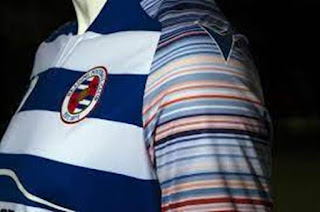
"When the English football club Reading F.C. takes to the field for its first home game of the season this weekend, the sleeves on its kits will look a bit different from years past. Instead of the club's traditional blue and white bands, fans will see 150 narrow stripes in varying shades of red and blue. The change isn't about aesthetics: The new sleeves are a data visualization of global warming known as climate stripes."

I am not sure how many fans in the stands will notice, given how well the design blends in with the shirt at present, but the change at least allows the club to make a statement:
 

The design comes from the idea of climate stripes, which represent periods of hotter and colder temperatures across time (e.g., https://www.climate-lab-book.ac.uk/2018/warming-stripes/):
 

This is either an indication of how far the climate debate is beginning to seep into public consciousness, or a gimmick that will be missed by almost everyone.

Take care
David

David Chandler
© Sage Publications, 2020

Instructor Teaching and Student Study Site: https://study.sagepub.com/chandler5e 
Strategic CSR Simulation: http://www.strategiccsrsim.com/
The library of CSR Newsletters are archived at: https://strategiccsr-sage.blogspot.com/


An English Football Club Is Adding Global Warming Data to Its Kits
By Ira Boudway
August 6, 2022
Bloomberg Green

Tuesday, September 27, 2022

Strategic CSR - Nickel

The article in the url below captures the complexity of the effort to make our economy more sustainable. Specifically, it tells the story of an exploratory mine in Minnesota, run by Talon Metals, that is seeking to extract nickel. One of the many reasons nickel is in demand is that it is essential for making the batteries we need to run electrical vehicles (see Strategic CSR – EVs):

"The company is proposing to build an underground mine near Tamarack that would produce nickel. … It would be a profitable venture for Talon, which has a contract to supply nickel for Tesla's car batteries, and a step forward in the country's race to develop domestic supply chains to feed the growing demand for electric vehicles."

All well and good, except for the fact that extracting nickel is a messy business:

"But mines that extract metal from sulfide ore, as this one would, have a poor environmental record in the United States, and an even more checkered footprint globally. While some in the area argue the mine could bring good jobs to a sparsely populated region, others are deeply fearful that it could spoil local lakes and streams that feed into the Mississippi River. There is also concern that it could endanger the livelihoods and culture of Ojibwe tribes whose members live just over a mile from Talon's land and have gathered wild rice here for generations."

Talon has said it will take every effort to prevent that from happening, but of course we would expect them to say that while they are still seeking permission to open the mine. Some remain suspicious, which is only natural given the track-record the extraction industries have earned for themselves:

"But some people in the community remain skeptical, including about the company's promises to respect Indigenous rights, like the tribes' authority over lands where their members hunt and gather food. Part of that mistrust stems from the fact that Talon's minority partner, Rio Tinto, provoked outrage in 2020 by blowing up a 46,000-year-old system of Aboriginal caves in Australia in a search for iron ore."

What I find interesting/frustrating about this story though is the conundrum it creates. If the only way to obtain the metals and other raw materials we need to transition from a fossil fuel economy is to raise the risk of additional environmental damage, it makes what is an extremely challenging transition that much harder. As Kelly Applegate, "the commissioner of natural resources for the Mille Lacs Band of Ojibwe" notes:

"'Talon and Rio Tinto will come and go — greatly enriched by their mining operation. But we, and the remnants of the Tamarack mine, will be here forever.'"

Take care
David

David Chandler
© Sage Publications, 2020

Instructor Teaching and Student Study Site: https://study.sagepub.com/chandler5e 
Strategic CSR Simulation: http://www.strategiccsrsim.com/
The library of CSR Newsletters are archived at: https://strategiccsr-sage.blogspot.com/


Batteries to Power Electric Cars Need Nickel. A Plan to Mine It in the U.S. Faces Pushback
By Ana Swanson
September 1, 2022
The New York Times
Late Edition – Final
B1, B5
 

Thursday, September 22, 2022

Strategic CSR - Toilets

The article in the url below is interesting because it shows the power of architecture (and design, art, and public policy) to create cities that are more pleasing;

"Toilets are usually out of sight and out of mind, until nature calls. Yet it is this universality and daily use that make restrooms a lens for examining the relationship between our cities and lifestyles, with each one telling a story about a snapshot in time. One country where toilets are appreciated and openly discussed, however, is Japan, so much so that it inspired German filmmaker Wim Wenders to make a new movie about a collection of public restrooms in the Shibuya district of Tokyo."

What is so interesting about these toilets?

"The toilets examined in the film are part of The Tokyo Toilet art project, which employed 16 world-famous designers to revamp 17 public restrooms in the capital. The project's goal is to eliminate negative stereotypes about public toilets with innovative designs, modern equipment and careful upkeep, which at the same time evoke qualities such as cleanliness, meticulousness and quirkiness typically associated with Japan."

For more on the project and a list of all the toilet designs (with photos), see: https://tokyotoilet.jp/en/. The Japanese take their toilets seriously:

"In the bubble era of the 1980s, toilet maker Toto introduced the electronic Washlet, a refined version of an American-made bidet for hospital patients with hemorrhoids that the company had been importing. The Washlet is now almost synonymous with Japanese culture and is being exported all around the world, as more people come to desire the comfort and cleanliness of the product, particularly during Covid. Today, 80.3% of Japanese households contain a Washlet-type toilet, according to a Cabinet Office survey, and they are also ubiquitous in hotels, restaurants, department stores and even public restrooms like the Tokyo Toilet."

Photos of many of the toilets in the project are also displayed in the article, below.

Take care
David

David Chandler
© Sage Publications, 2020

Instructor Teaching and Student Study Site: https://study.sagepub.com/chandler5e 
Strategic CSR Simulation: http://www.strategiccsrsim.com/
The library of CSR Newsletters are archived at: https://strategiccsr-sage.blogspot.com/


These Toilets in Japan Are About to Get Their Own Movie
By Max Zimmerman
May 26, 2022
Bloomberg Businessweek
 

Tuesday, September 20, 2022

Strategic CSR - ESG

The article in the url below demonstrates the challenge for investing in inserting altruistic or ideological motivations in place of market mechanisms. The danger is that the returns are diminished and that only a certain percentage of the market is willing to compromise their return on investment. This has been playing out with ESG funds for some time now, but reality appears to be catching up. As investigations by regulators into, first, Deutsche Bank (in Germany) and, soon after, Goldman Sachs (in the U.S.) were announced over the summer, the reality of the ESG façade has become increasingly apparent. Ultimately, it cannot be solved until we first agree on what needs to be measured (the E, S, and G), and then develop effective metrics of those constructs (many of which do not currently exist). For now, it should be painfully apparent that the majority of the ESG (or SRI) investment craze is not moving us any closer to a more sustainable economy and, in fact, might be doing more harm than good if it lulls us into the belief that we are actually making progress. At present, of course, all progress on tackling climate change appears to be put on hold as we deal with the consequences of the conflict in Ukraine:

"So far in 2022, the S&P 500 is down more than 13 percent, and it briefly dipped more than 20 percent below its peak, putting stocks in bear market territory. Dismal as the stock market may be, the situation looks even worse if you are worried about the future of the planet. The fact is that only one broad stock sector has provided consistent returns over the last year: old-fashioned fossil fuel, and the companies that extract, refine, sell and service it."

More specifically:

"In fact, when I looked at a performance table of the top companies in the S&P 500 for 2022, I found that 19 of the top 20 spots belonged to companies connected, in one way or another, with fossil fuel. The best performer was Occidental Petroleum, with a gain of 142 percent."

And, what is worrying is that this trend looks set to continue:

"Russia's assault on Ukraine and the mounting Western sanctions are improving prospects for fossil fuel, Bank of America noted in a report to clients on Thursday. 'Our commodity strategists expect that a sharp contraction in Russian oil exports could trigger a full-blown 1980s-style oil crisis,' with energy prices rising much higher, the report said. 'Not owning energy is becoming more costly,' it said. 'With China reopening, peak driving season and favorable positioning/valuations, we see more upside' for energy prices."

The whole point about strategic CSR is that a firm's self-interest is determined by its stakeholders. Thus, creating value for those stakeholders is what makes the firm successful. The moral challenge of that reality (the framework is descriptive, not normative) is when the stakeholders (i.e., all of us) want something that is not necessarily 'good' for us.

Take care
David

David Chandler
© Sage Publications, 2020

Instructor Teaching and Student Study Site: https://study.sagepub.com/chandler5e 
Strategic CSR Simulation: http://www.strategiccsrsim.com/
The library of CSR Newsletters are archived at: https://strategiccsr-sage.blogspot.com/


Fossil-Fuel Shares Lead the Stock Market. How Awkward
By Roxane Gay
June 5, 2022
The New York Times
Late Edition – Final
BU3
 

Thursday, September 15, 2022

Strategic CSR - Markets

The article in the url below injects some reality into the frothy reception that the recently passed climate bill in Washington has been receiving. In particular, it contrasts that piece of good news, with the breakdown in climate negotiations between the U.S. and China, which happened the same weekend (due to disagreements about Taiwan):

"This month's biggest climate milestones happened over one weekend. On Sunday, the US Senate approved hundreds of billions of dollars in climate and clean-energy spending. Just two days before, climate cooperation between the US and China — the world's largest economies and emitters — came to an abrupt halt."

The article is interesting, I think, because it presents the negotiations these two (largest polluting) countries had been having since COP26, in a competitive light. More specifically, it made the argument that competition between these two giant economies as to who could 'out-green' the other as essential to the planet's climate goals:

"Having the US and China feel like they're competing to do more on climate change in order to write the new global order is the strongest position the world could be in," said [Taiya Smith, a senior associate … at the environmental think tank E3G]."

To me, this reinforces the strength of market forces in propelling progress and identifying optimal outcomes (given all the usual qualifiers about imperfect markets that are required when making such a statement).

Take care
David

David Chandler
© Sage Publications, 2020

Instructor Teaching and Student Study Site: https://study.sagepub.com/chandler5e 
Strategic CSR Simulation: http://www.strategiccsrsim.com/
The library of CSR Newsletters are archived at: https://strategiccsr-sage.blogspot.com/


The US-China Rift Moves Climate Politics Into an Era of Competition
By Akshat Rathi
August 9, 2022
Bloomberg Green
 

Tuesday, September 13, 2022

Strategic CSR - Democracy

The article in the url below is a fun story that, unfortunately, reflects how far democracy has fallen in the eyes of the public. Specifically, the article reports on a contest for children (aged 13-18 who live in the county) to create the design for the 'I voted' sticker in a county in New York state. The plan is that these stickers will be given to voters after they have voted in the next political election:

"Ashley Dittus, an election official in Ulster County, N.Y., vividly remembers her excitement when the first submission for this year's countywide youth 'I voted' sticker design contest appeared in her email this spring. The entry, from Hudson Rowan, 14, was an electric concoction of colors: a pink and purple and turquoise creature with a wild bloodshot stare, a toothy neon grin and spiderlike legs. To the right, scrawled in red letters: I VOTED. Ms. Dittus, the county's Democratic commissioner of elections, immediately printed out the design and started showing it to people in her office. Everyone's reaction was the same, she said: It made them smile."

It is easy to see why people like Hudson's design; it is also easy to see why people think it makes a statement about the current state of democracy in the West:


Hudson's revealing comment:

"'Politics right now in the world is all kinds of crazy, … and I feel like the creature that I drew kind of resembles the craziness of politics and the world right now.'"

While the contest was intended to raise civic awareness among children living in the NY county, the contest and Hudson's popular design have morphed into a much broader discussion about politics today. The trouble with such discussions, as they grow and evolve, however, is that they continue to spread the rot. I always used to think the same about Jon Stewart's Daily Show (and other satirical commentators). Although the observations he was making were accurate and insightful (and funny), by pointing them out he was also spreading awareness of how bad things have become. That is the difference, I think, between a critique (however accurate and insightful) and a proposed solution. The idea, I guess, is that, by identifying the scale of the problem, it shocks people into action. The trouble is that, if things have deteriorated beyond a certain point, the way out of the hole is such a challenge that people are more demoralized than motivated.

None of this is Hudson's fault, of course. He has just submitted a cool design to a contest that normally would not have attracted any attention:

"Since voting for the winning entry began in July, Hudson's entry has received more than 158,500 votes, out of the about 169,500 total votes cast — completely overtaking last year's roughly 2,200 votes. The county has a population of about 180,000 people and about 122,000 active registered voters, but the contest is not limited to county residents."

The key, of course, is what reaction does his comment on the state of our democracy elicit – we could certainly do with a functioning democracy, given the scale of the problems we face. More details on this story are in the article in the second url below.

Take care
David

David Chandler
© Sage Publications, 2020

Instructor Teaching and Student Study Site: https://study.sagepub.com/chandler5e 
Strategic CSR Simulation: http://www.strategiccsrsim.com/
The library of CSR Newsletters are archived at: https://strategiccsr-sage.blogspot.com/


What Has 6 Legs, 2 Eyes and Over 158,000 Votes? An 'I Voted' Sticker
By Hurubie Meko
July 13, 2022
The New York Times
Late Edition – Final
A14

Why a 'spider crab' is crawling to the top of a US 'I voted' sticker contest
By Sam Levine
July 14, 2022
The Guardian

Thursday, September 8, 2022

Strategic CSR - Eco-activism

The article in the url below highlights a growing trend among environmental activists who are frustrated that their largely peaceful protests to date have had next to no impact on the pace and scale of greenhouse gas emissions. In response, some are concluding that peaceful protests are ineffective, and are raising the stakes of their engagement:

"You walk out of your house on a sunny weekend morning, eager to drive your gasoline-powered sports utility vehicle to the local beach. You're about to turn on the engine and hit the road, when you notice a flier stuck underneath the windshield wiper. 'We have deflated one or more of your tires,' it reads. 'You'll be angry, but don't take it personally. It's not you, it's your car…'"

This direct action is being committed by a group that calls itself (not very imaginatively, I might add) Tyre Extinguishers (see https://twitter.com/T_Extinguishers):

"Since March, the group has deflated the tires of nearly 6,500 SUVs in Austria, Canada, France, Germany, New Zealand, the Netherlands, Sweden, the UK and the US. Their goal? Drawing attention to gas-guzzling vehicles' impact on climate change and air pollution. If SUVs were an individual country, they would have ranked sixth in the world for emissions last year, accounting for more than 900 million metric tons of CO₂."

And, apparently, they are not alone:

"As politicians dither on climate policy that matches what the science demands, some citizens are going beyond peaceful protests to make themselves heard. In July, activists with the group Just Stop Oil glued themselves to frames of paintings in art galleries in the UK, and breached the track on the first lap of the Formula 1 British Grand Prix. Also in July, the French group Derniere Renovation interrupted the Tour de France cycling race. Last year, the group Insulate Britain disrupted traffic across cities and highways in the UK."

Such groups are styling themselves on the activities (and successes) of Extinction Rebellion (https://rebellion.global/), which was founded in the UK in 2018 and has since inspired many others:

"These activist outfits are all building on tactics popularized by Extinction Rebellion (XR), which … now acts as an umbrella organization for a variety of global groups. In July, members of the group Doctors for XR broke glass at the London office of finance giant JP Morgan Chase & Co. In April, activists of Scientist Rebellion chained themselves to the doors of JP Morgan Chase's office in Los Angeles."

As for Tyre Extinguishers, expect them to come to a parking garage near you, shortly:

"Tyre Extinguishers say they currently have 50 groups worldwide, to whom they provide 'inspiration' on their website in the form of images to identify SUVs, a video on how to deflate tires and the 'It's your car' leaflet in 10 languages. The group's ultimate aim is 'to see bans on SUVs in urban areas, pollution levies to tax SUVs out of existence, and massive investment in free, comprehensive public transport,' it says. 'But until politicians make this a reality, Tyre Extinguishers action will continue.'"

The article in the second url below explains how this group has spread to New York City and also more about how they operate (see also, here, for a recent update on their progress):

"The Tyre Extinguishers, as they call themselves, furtively hand around bags of lentils ahead of their raid (the legumes are jammed into a tire valve to release its air slowly overnight) and size up their quarry. … One of the group kneels down, unscrews the tire valve cap, stuffs a lentil inside and puts the cap back on. The tire immediately lets out a startled 'pfft' noise, a leaflet is slapped on to the windshield and the group melts back into the night."

For a related example, see the article in the third url below, "written by youth activists involved in End Fossil: Occupy!" (https://endfossil.com/).

Take care
David

David Chandler
© Sage Publications, 2020

Instructor Teaching and Student Study Site: https://study.sagepub.com/chandler5e 
Strategic CSR Simulation: http://www.strategiccsrsim.com/
The library of CSR Newsletters are archived at: https://strategiccsr-sage.blogspot.com/


As Politicians Dither on Climate, Activists 'Fight Back' by Deflating SUVs
By Akshat Rathi
July 26, 2022
Bloomberg Green

'Like a public shaming': A night with the eco-activists deflating SUV tires
By Oliver Milman
July 27, 2022
The Guardian

We're occupying schools across the world to protest climate inaction
By End Fossil: Occupy!
July 26, 2022
The Guardian
 

Tuesday, September 6, 2022

Strategic CSR - Roe v. Wade

As you will all no doubt remember, the U.S. Supreme Court was busy over the summer, in particular overturning Roe v. Wade – the 1973 decision that had allowed abortion to be legal across the whole country. This newsletter is not about that, as I am sure you all have firmly set views on the topic; instead, this newsletter is about the article in the url below that reports Patagonia's reaction to the decision. Understandably, it was emotional and demonstrates the firm's progressive views and its support for its employees (e.g., see also Strategic CSR – Patagonia):

"Outdoor clothing brand Patagonia said on Friday that it would post bail for any employees arrested at abortion protests. The company will provide 'training and bail for those who peacefully protest for reproductive justice,' it said on LinkedIn. The perk applies to both full-time and part-time workers, Patagonia said."

Apparently (and quite surprisingly, I think), this is not a new thing for the firm:

"The company offers protest training and has a policy of bailing out employees arrested at peaceful protests, according to Bloomberg."

What I was wondering as I read through the article is how this response would be received by the CSR community. My guess is it would largely be welcomed (and I certainly liked it), but that then made me wonder whether it is always ok for companies to encourage behavior that gets people arrested. The company softens it a bit by adding the "peaceful protest" qualifier but, after all, they are anticipating employees will be arrested, which is the only reason they would need bail. Specifically, I wondered what I would think if I saw a headline saying that Exxon was willing to bail out any employees caught protesting against a UN COP conference? Or, what if Black Rifle Coffee Company had offered to pay the court costs of any of its employees caught at the January 6 insurrection?

As long as my reaction would have been the same (i.e., similarly supportive), then I am being consistent in my views. But, if I liked the Patagonia response, but would have objected to a similar policy by Exxon or BRCC, then I am being hypocritical. Values are values, and it is hard to argue that one person's values are any less valid than someone else's. I might disagree with them and think the world would be much better off if everyone shared my values, but that is not how life works. And, this decision by the Supreme Court seems like a good issue on which to make the point.

If we want businesses to be values-based, then we have to recognize there will be some that advocate for causes with which we disagree. The battle comes in trying to 'win' the day on the issues about which we care the most. If we lose those arguments, it is not because the other side is 'evil,' it is because we disagree about something fundamental (however ill-informed you think the other side's position is).

So, my sense is that we should only be happy to see Patagonia inciting its employees to act lawlessly, if we are perfectly ok with Exxon, or BRCC, or Chick-fil-A, or whomever else doing the same. If acting based on our values and principles is objectively a good thing, then that applies to all the values and principles, not just the ones we support. In terms of strategic CSR, being "socially responsible" does not mean only firms doing things that we think are acceptable; it means creating value for the firm's stakeholders, according to their values and perceived self-interest (see Strategic CSR – Self-interest), even if that looks like something we oppose. In other words, just because we don't like something does not mean it is not socially responsible.

Take care
David

David Chandler
© Sage Publications, 2020

Instructor Teaching and Student Study Site: https://study.sagepub.com/chandler5e 
Strategic CSR Simulation: http://www.strategiccsrsim.com/
The library of CSR Newsletters are archived at: https://strategiccsr-sage.blogspot.com/


Patagonia will post bail for any employees arrested at abortion protests
By Tim Levin
June 24, 2022
Business Insider
 

Thursday, September 1, 2022

Strategic CSR - Amazon

If there was ever a pragmatic argument for treating your employees with care and respect, the article in the url below suggests that Amazon may have just stumbled onto it (by mistake, of course):

"Is Amazon about to run out of workers? According to a leaked internal memo, the retail logistics company fears so. 'If we continue business as usual, Amazon will deplete the available labor supply in the US network by 2024,' the research, first reported by Recode, stated."

Of course, if you are going to churn through employees without any concern for their health or wellbeing, the logical extrapolation of that approach as an employer is that, eventually, you will run out (as long as you exceed the replacement rate). The scale at which Amazon operates (and the ambition it has to expand) just means that it happens sooner to Amazon than it would anyone else:

"Amazon is right to be worried – its staff turnover rate is astronomical. Before the pandemic, Amazon was losing about 3% of its workforce weekly, or 150% annually. By contrast the annual average turnover in transportation, warehousing and utilities was 49% in 2021 and in retail it was 64.6%, less than half of Amazon's turnover."

If so, it couldn't happen to a nicer guy:

"Even Amazon's founder, Jeff Bezos, is worried. Bezos originally welcomed high turnover, fearing long-term employees would slack off and cause a 'march to mediocrity.'"

Even while there seems to have been a more recent change of heart:

"But in his final letter to shareholders as chief executive last year, Bezos said the company had to 'do a better job' for its employees. Amazon will commit to being 'earth's best employer and earth's safest place to work,' he wrote. In part, Bezos's change of heart is down to a wave of unionization efforts at the company's warehouses. But Amazon also faces a problem of scale. As the US's second largest private employer, it is now struggling to replace all the workers it loses."

It is central to Strategic CSR that any firm that does not consider its employees to be its primary stakeholder (all else equal) is dysfunctional in some way. Amazon has a long way to go. Hopefully this research will cause them to reconsider their business model:

"Workers and labor groups have long decried Amazon's working conditions and high employee turnover amid high injury rates."

Take care
David

David Chandler
© Sage Publications, 2020

Instructor Teaching and Student Study Site: https://study.sagepub.com/chandler5e 
Strategic CSR Simulation: http://www.strategiccsrsim.com/
The library of CSR Newsletters are archived at: https://strategiccsr-sage.blogspot.com/


Amazon could run out of workers in US in two years, internal memo suggests
By Michael Sainato
June 22, 2022
The Guardian