The CSR Newsletters are a freely-available resource generated as a dynamic complement to the textbook, Strategic Corporate Social Responsibility: Sustainable Value Creation.

To sign-up to receive the CSR Newsletters regularly during the fall and spring academic semesters, e-mail author David Chandler at david.chandler@ucdenver.edu.

Showing posts with label EVs. Show all posts

Tuesday, March 25, 2025

Strategic CSR - Mining

The article in the url below makes the case for reviving mining in the U.S. for the key raw materials required to transition to a more sustainable energy industry:

"Although America has abundant deposits of many of the critical minerals that go into our vehicles, electronics and buildings, these materials are mostly mined abroad in poorer nations where labor is cheap (or worse, workers are enslaved) and environmental laws are more permissive, rarely enforced or easily sidestepped with bribes."

The argument is that, by outsourcing much of this extraction, we currently focus on poorer societies where the materials can be mined more cheaply, primarily because the standards to do so are so low:

"The decline of domestic mining means that Americans are outsourcing the environmental and social costs of our inexpensive consumer goods to lower-income nations. More than 70 percent of the world's cobalt, sometimes called the blood diamond of electric vehicle batteries, comes from the Democratic Republic of Congo, where child labor and sexual violence are rampant in mines. About half of the world's nickel, another key ingredient in electric vehicle batteries, comes from mines in Indonesia, some of which have wiped out almost 200,000 acres of rainforest amid allegations of operating illegally on Indigenous land."

So, mining domestically would introduce higher standards, by definition; it is also required so that increased supply can match growing demand:

"A United Nations study found that meeting international climate goals by 2030 could require building as many as 80 copper mines, 70 lithium mines and 70 nickel mines to supply the materials for electric vehicles, solar panels and a host of other low-carbon technologies."

And, the article advocates for a consumer-led component to the economic equation, with individual customers willing to pay the (relatively) small premium that domestic production would generate:

"Many of us are already paying more for responsibly sourced goods, such as chocolate and coffee. We should demand the same for our smartphones and batteries. … Although mining will never be zero-impact, it has the potential to be fair and responsible."

Take care
David

David Chandler
© Sage Publications, 2023

Instructor Teaching and Student Study Site: https://study.sagepub.com/chandler6e  
Strategic CSR Simulation: http://www.strategiccsrsim.com/
The library of CSR Newsletters are archived at: https://strategiccsr-sage.blogspot.com/


This Dirty Industry Is Better Off Operating in America
By Stephen Lezak
July 28, 2024
The New York Times
Late Edition – Final
SR8
 

Thursday, August 22, 2024

Strategic CSR - Welcome back!

 
Welcome back to the Strategic CSR Newsletter!
The first newsletter of the Fall semester is below.
As always, your comments and ideas are welcome.
 

It was good to see an estimate for the time it will take EV charging stations to replicate the gasoline station network, from the article in the url below:

"It'll be eight years for fast-charging sites to outnumber gas stations in the US. That's if the current pace of deployment holds. But momentum is only expected to accelerate as the nation builds on the now nearly 9,000 public fast-charging sites."

As of the summer of 2024:

"The US added about 700 new public fast-charging stations for electric cars in the second quarter, bringing the nationwide total to nearly 9,000."

Hope you all have a wonderful semester.
Take care
David

David Chandler
© Sage Publications, 2023

Instructor Teaching and Student Study Site: https://study.sagepub.com/chandler6e  
Strategic CSR Simulation: http://www.strategiccsrsim.com/
The library of CSR Newsletters are archived at: https://strategiccsr-sage.blogspot.com/


US Public EV Chargers Set to Surpass Gas Stations in Eight Years
By Kyle Stock
July 18, 2024
Bloomberg
 

Tuesday, April 16, 2024

Strategic CSR - Wind turbines

The article in the url below deals with the issue of how to discard the detritus of the renewable energy sector. Specifically, it notes that there is a large amount of hardware that is required to produce wind energy, which is rapidly reaching the end of its lifespan – particularly the blades from the turbines that were installed in the early 2000s:

"By 2025, trade association WindEurope estimates that 25,000 metric tons of wind turbine blades will be phased out each year in Europe alone, equivalent to the weight of more than 6,000 Hummer SUVs."

Unfortunately, most of the blades that were installed in those early years are either not recyclable or just not recycled:

"Most wind turbine blades end up in landfills or are incinerated. … That footprint only stands to grow: Total installed wind capacity reached 906 gigawatts worldwide last year, more than quadruple 2010 levels, according to the Global Wind Energy Council, an industry group. An additional 600 gigawatts are expected by 2027."

Nonprofit groups like Canvus (an organization dedicated to bringing "communities, organizations, and artists together to reimagine spaces, inspire others, and share new experiences") are working to convert the blades into functional items:

"At first glance, the benches outside the Great Lakes Science Center in downtown Cleveland seem unremarkable. But a closer inspection shows that their droplet-shaped shells aren't made from wood or metal. A scan of the attached QR codes reveals even more: These benches used to be wind turbine blades. Painted by local artists and weighing in at about 500 pounds (230 kilograms) apiece, the benches were crafted by Rocky River, Ohio-based Canvus, which will install 10 more in the same location later this month. Altogether, the dozen benches reuse roughly a quarter of a single 150-foot (45-meter) wind turbine blade."

They have lots of other ideas, too:

"The team came up with 150 ideas for products to make out of turbine blades before settling on 11 – planters, picnic tables and benches – that could be produced at scale. It also assigned each product a pithy name: the 'deborah' bench, for example, offers shade protection and is also available as a swing; 'beacon,' meanwhile, can be a bench, planter or fountain."

The article in the second url below confirms that there is a lot of hardware out there (EVs, bikes, and scooters) that has been discarded as the market attempts to identify the ideal solutions to specific sustainability-related problems:

"China is now the world leader in clean cars, producing around 6 million EVs and plug-in hybrids last year, or almost one in every three new cars sold domestically. It accounts for 60% of the world's current electric fleet, and has the most extensive EV charging infrastructure on Earth – also built with government support. But that lightning-fast development also left behind plenty of casualties. Many of the ride-hailing companies that were early adopters of EVs have gone out of business. There are now around 100 Chinese electric-car makers, down from roughly 500 in 2019."

Take care
David

David Chandler
© Sage Publications, 2023

Instructor Teaching and Student Study Site: https://study.sagepub.com/chandler6e 
Strategic CSR Simulation: http://www.strategiccsrsim.com/
The library of CSR Newsletters are archived at: https://strategiccsr-sage.blogspot.com/


Retired Wind Turbine Blades Live on as Park Benches and Picnic Tables
By Coco Liu
June 15, 2023
Bloomberg

China's Abandoned, Obsolete Electric Cars Are Piling Up in Cities
August 17, 2023
Bloomberg
 

Monday, April 8, 2024

Strategic CSR - Gas tax

The "gas tax" in the U.S. is money raised both by the federal government and individual states (separate taxes) and used to invest in the national road system. It is one of the most effective taxes because it is targeted and, at the federal level, famously has not been raised since the 1993 (for a breakdown of state-by-state taxes, see here). In spite of being so effective, politicians are so afraid to introduce any increase in the overall tax burden that investment has dropped, and the country's infrastructure has suffered. The article in the url below argues this situation is about to get worse, as drivers increasingly trade-in internal combustion engine cars and replace them with EVs, which obviously do not need any petrol:

"Back in 2001, … lawmakers in Oregon recognized that the adoption of EVs and hybrids would eventually mean less revenue from the state's gas tax, which would mean less money to pay for roads and bridges. So they formed a committee to study the problem. After considering a tire tax, a battery tax and numerous other options, the committee concluded that Oregonians should be charged based on how many miles they drive. Twenty-two years later, the Road User Fee Task Force continues to operate small pilot programs. But like most other states that have seen gas taxes start to evaporate, Oregon still doesn't have a mandatory alternative revenue plan in place. … all proposed solutions are problematic."

There is still time, but given the seemingly omnipresent dysfunction in politics, it is hard to see how this essential problem can be overcome. In order to meet the ever-stricter gas mileage requirements being imposed by states, and in addition to growing consumer demand, sales of EVs will only rise:

"Electric vehicles currently account for only about 5% of new car sales in the U.S., but that figure will climb to at least 40% by 2030, according to S&P Global Mobility forecasts. Two years ago President Biden signed an executive order calling for half of the vehicles sold in the U.S. to be electric by the end of the decade. A few states, such as California, have been even more aggressive, mandating that all new cars sold after 2035 meet zero-emission standards."

While there are multiple sources of investment funds for road infrastructure, the gas taxes are central:

"States pay for roads in a variety of ways, including vehicle registration fees and tolls, plus money from their general funds. Gasoline taxes account for a large portion of revenue, with the average U.S. rate currently at 32.3 cents a gallon at the state level along with 18.4 cents in federal tax. (Both figures are somewhat higher for diesel fuel.) Even without the impact of electric vehicles, gas-tax revenue is falling as new cars become more fuel efficient and Americans do less driving."

As with so many issues in the U.S., the response by individual states varies significantly. At least most states understand this is a problem that they need to solve:

"Faced with crumbling infrastructure and reduced revenue, 31 states and the District of Columbia have implemented some form of variable-rate gas tax. … Several states are seeking to recoup revenue lost to electric vehicles by imposing new fees on EV owners. Last month Texas began charging $400 to register an EV, plus an additional $200 every year thereafter—on top of the $50.75 registration fee all car owners pay. In all, 33 states assess annual EV fees, according to the National Conference of State Legislatures. Meanwhile, seven states levy a tax on electricity at EV charging stations. Most are directing the funds to road construction, although Iowa's tax is being placed in a statewide economic development fund. … A road-usage fee is the most frequently cited long-range alternative, as Oregon's task force determined 22 years ago. More than a dozen states are studying it and four—Oregon, Utah, Virginia and Hawaii—have implemented voluntary pilot programs. Hawaii's model, which begins in 2025, will apply to only electric vehicles at the start, with motorists opting to pay a flat rate annual fee of $50 or get charged 0.8 cents per mile."

But, as Oregon has learned, fixing the problem in theory is very different than implementing a lasting solution in practice:

"… if Oregon has learned anything after 22 years of study—including a voluntary program with fewer than 1,000 participants—it's that the road to finding an alternative to gasoline taxes is filled with potholes."

Take care
David

David Chandler
© Sage Publications, 2023

Instructor Teaching and Student Study Site: https://study.sagepub.com/chandler6e 
Strategic CSR Simulation: http://www.strategiccsrsim.com/
The library of CSR Newsletters are archived at: https://strategiccsr-sage.blogspot.com/


How Will States Pay for Roads When Gas Taxes Evaporate?
By Peter Funt
October 21-22, 2023
The Wall Street Journal
Late Edition – Final
C4
 

Friday, April 5, 2024

Strategic CSR - Geopolitics

The author in the article in the url below sets up his argument by noting the geopolitical role played by fossil fuels since their emergence as the dominant energy source. While solving the nasty side-effect of direct carbon emissions, he argues that renewable energy might be introducing an alternative source of "commodity dependence and geopolitical baggage":

"Wind, sun and hydrogen are free. But the equipment that transforms them into energy, stores it in batteries and transmits it needs vast quantities of minerals whose supply is more concentrated than that of oil and gas. Democratic Republic of Congo has 43% of the world's cobalt deposits, Argentina 34% of lithium, Chile 30% of copper and Indonesia 19% of nickel. … All exceed Saudi Arabia's 12% share of global oil production and Russia's 16% share of natural-gas output. For all four minerals, the five largest countries have more than half of global deposits. With oil and gas, the top five control less than half. … Downstream production is even more concentrated: China refines 70% of the world's cobalt, 65% of its lithium and 42% of its copper, far exceeding OPEC's share of oil output."

And, while the sustainability lobby is falling over itself to welcome the transition to electricity that is being encouraged by the Inflation Reduction Act in the U.S., the reality is that it will increase demand for these minerals that are already in short supply ("the law will increase that demand by 12% to 15% by 2035"), while also making the U.S. more dependent on imports from countries that are not necessarily predisposed to be friendly:

"For example, in 2035, non-free-trade partners will account for 90% of global cobalt production, most of it in Democratic Republic of Congo, which exports 70% of its production to China."

Meanwhile, the regulatory bureaucracy in the U.S. ensures that, even though there are deposits of some of these minerals available (in theory), we just cannot get out of our own way quickly enough to access them:

"The U.S. alone boasts copper deposits equivalent to 20 years' worth of its own demand. … The problem is accessing it; the firm estimates it takes 15 years on average for a mine to go from discovery to production."

The problems range from permitting ("seven to 10 years [in the U.S.], versus two to three in Australia and Canada"), to refining ("A copper refinery or smelter hasn't been built in the U.S. since the 1970s"), to what the author terms "resource nationalism":

"From the 1950s to the 1980s, western oil companies saw their operations nationalized by host countries. Today, resource nationalism is once again spreading. Indonesia is restricting exports of nickel ore to nurture domestic refining, and Chile is partially nationalizing its lithium mines."

Take care
David

David Chandler
© Sage Publications, 2023

Instructor Teaching and Student Study Site: https://study.sagepub.com/chandler6e 
Strategic CSR Simulation: http://www.strategiccsrsim.com/
The library of CSR Newsletters are archived at: https://strategiccsr-sage.blogspot.com/


Green Energy Shuffles Global Influence
By Greg Ip
September 14, 2023
The Wall Street Journal
Late Edition – Final
A2
 

Tuesday, March 26, 2024

Strategic CSR - Statistics

Lies, damn lies, and statistics. The two charts below were on the front page of the business section of The NYT, recently, and can be used to tell contrasting stories about the successful adoption of EV cars.

The first chart would likely be used to demonstrate how EVs (and hybrids) are diffusing rapidly, and are being embraced by a public eager to tackle climate change:
 

The second chart, on the other hand, which plots those adoptions relative to the total number of cars (most of which, of course, are still ICEs), could be used to tell a very different story:
 

Take care
David

David Chandler
© Sage Publications, 2023

Instructor Teaching and Student Study Site: https://study.sagepub.com/chandler6e 
Strategic CSR Simulation: http://www.strategiccsrsim.com/
The library of CSR Newsletters are archived at: https://strategiccsr-sage.blogspot.com/


Rapid Rise, With Reservations
By Nadja Popovich
March 13, 2024
The New York Times
Late Edition – Final
B1
 

Thursday, March 7, 2024

Strategic CSR - EVs

Following on from Tuesday's newsletter, the data in the article in the url below represent an additional challenge to the wider adoption of EVs:

"Americans are keeping their cars longer than ever. The average age of a passenger vehicle on the road hit a record 12.5 years [in 2023], according to data gathered by S&P Global Mobility. Sedans like Holdsworth's are even older, on average – 13.6 years."

Why is this happening?

"Blame it mainly on the pandemic, which in 2020 triggered a global shortage of automotive computer chips, the vital component that runs everything from radios to gas pedals to transmissions. The shortage drastically slowed global assembly lines, making new vehicles scarce on dealer lots just when consumers were increasingly eager to buy."

The constrained supply, of course, also contributed to inflation, which is another factor:

"Since the pandemic struck three years ago, the average new vehicle has rocketed 24% to nearly $48,000 as of April, according to Edmunds.com. Typical loan rates on new-car purchases have ballooned to 7%, a consequence of the Federal Reserve's aggressive streak of interest rate hikes to fight inflation."

The result?

"It's all pushed the national average monthly auto loan payment to $729 – prohibitively high for many. Experts say a family earning the median U.S. household income can no longer afford the average new car payment and still cover such necessities as housing, food and utilities."

And, this is not just affecting sales of new cars:

"Used vehicle prices, on average, have surged even more since the pandemic hit – up 40%, to nearly $29,000. With an average loan rate having reached 11%, the typical monthly used-vehicle payment is now $563. Faced with deciding between making a jumbo payment and keeping their existing vehicles, more owners are choosing to stick with what they have, even if it means spending more on repairs and maintenance."

In order for EVs to be widely adopted, old cars need to be removed and, in order for this to make sense for the environment, the net effect needs to be carbon positive (i.e., replaced with EVs or hybrids). As with everything to do with climate change, it seems, we are doing too little, too late. Of course, the macro economic factors are not working in the planet's favor, but that has always been true. In order to divert from the pathway we are on, an intervention is required (and some leadership would be nice) – and most economists agree that the best intervention would be a revenue neutral carbon tax (see Strategic CSR – Carbon tax).

Take care
David

David Chandler
© Sage Publications, 2023

Instructor Teaching and Student Study Site: https://study.sagepub.com/chandler6e 
Strategic CSR Simulation: http://www.strategiccsrsim.com/
The library of CSR Newsletters are archived at: https://strategiccsr-sage.blogspot.com/


Repelled by high car prices, Americans are holding on to their vehicles longer than ever
By Tom Krisher
May 15, 2023
Associated Press
 

Tuesday, March 5, 2024

Strategic CSR - Electricity

The article in the first url below argues that, for all the talk about the shift to electrification, and the focus on producing electrical versions of goods already in existence (e.g., EVs; see Strategic CSR – EVs), we are not nearly as prepared as we think to transition:

"It makes sense: Electrification is often the fastest and cheapest way to decarbonize our energy consumption. The technologies to decarbonize electricity already exist and are, for the most part, readily deployable at a large scale by the private sector. But here's a sobering fact about all the talk of the 'electrification of everything': It isn't likely to happen. At least, not soon. We can't go all the way down the electrification road for a host of reasons—nor should we want to. For one thing, it would place unnecessary limitations on other viable solutions to rising greenhouse-gas emissions. It also ignores existing technical, regulatory and strategic constraints on electrification."

More specifically, the author presents what she argues are the five major barriers to the electrification of everything:

1. Some things can't be electrified

2. Cheaper alternatives may be coming for the most difficult-to-electrify areas

3. Access to land, a surfeit of complaints

4. Difficulty getting the necessary permits

5. Electricity grids are highly interruptible 


I am not sure these are the only five, or even the most important five (I read a while ago that, if all the cars currently in California became EVs overnight, the electrical system would need to produce 50 percent more electricity than its current capacity – and this is a utility that already has trouble keeping the lights on), but they do convey the complexity of electrification. Perhaps most important, they highlight the extent to which these challenges are not part of the current conversation (and policy making) around electrification, which is proceeding based on false or misleading assumptions. Developing an EV does not mean that every car can be an EV – in short, there are very few easy answers out there.


For a related argument (favoring hybrid cars over EVs), see the article in the second url below.


Take care

David


David Chandler
© Sage Publications, 2023

Instructor Teaching and Student Study Site: https://study.sagepub.com/chandler6e 
Strategic CSR Simulation: http://www.strategiccsrsim.com/
The library of CSR Newsletters are archived at: https://strategiccsr-sage.blogspot.com/


The Five Things Keeping Us From Going All-Electric
By Amy Myers Jaffe
July 24, 2023
The Wall Street Journal
Late Edition – Final
R1, R4-5

We May Not Be Ready for an All-E.V. World
By Peter Coy
July 17, 2023
The New York Times
Late Edition – Final
A19
 

Thursday, November 16, 2023

Strategic CSR - Cars + parking spaces

The article in the url below presents an interesting challenge to addressing climate change – US car size meets urban parking space. The article opens by describing the way architects determine how big they should make parking spaces when designing a building or parking lot – an allowance that is termed a "design vehicle":

"The design vehicle is a statistical composite of a car, compiled by the Parking Consultants Council, a professional association of parking lot designers. Every five years or so, the Parking Consultants Council analyzes the U.S.'s car sales data. It then calculates the 85th percentile car size. … The design vehicle Schneeman and his industry colleagues use is six feet seven inches wide and 16 feet 10 inches long; incidentally the exact width of a Ford's F-150, the U.S.'s most popular vehicle and a symbol of the country's appetite for larger cars."

The problem is that this method, which has served "the parking industry" well in the past ("ensuring space sizes accommodate the vast majority of American cars and leaving about 20 inches of space for people to open their doors and maneuver on either side"), is running into a problem. Specifically, there are no longer enough spaces and they are not big enough. The problem is particularly noticeable, of course, in older buildings or parking lots, where the size of the space was determined based on average car sizes from previous generations:

"Increasingly, cars are too big for parking spaces, especially in parking garages and other paid parking lots where developers pay close attention to space size. Like the proverbial frog in a slowly heating pot of water, our cars have gotten ever-so-gradually bigger with each passing year, but the parking space standards have barely budged. Now, in the third decade of the growing car size trend, people are starting to notice."

It seems that people put a lot of thought into parking spaces, and they want them bigger – that is until they realize the associated cost:

"When Warren Vander Helm, a partner at Parking Design Group, first meets with a client on a new project, one of the first things they will say is they want the spots to be big. But once Vander Helm walks them through the local zoning regulations that require a certain number of parking spaces, how much more surface area big spots will require to meet that minimum, and how much more that will cost, the enthusiasm for big spots wanes. 'For a surface lot, you're looking at $7,000, $7,500 just to build one parking space,' Vander Helm said. 'For an underground garage, in a city, it can be $200,000 per space, easy. Structured parking above ground is $40,000, $45,000 per space.'"

And, when multiplied by a large number of spaces in a building, "even a few inches can be the difference between profit and loss." And, today, car consumers in the U.S. want a different kind of car (SUV instead of sedans) and they want them bigger:

"Consider someone who switched from a Honda Civic to a Honda CR-V. This added about three inches in width. A CR-V to a Pilot, a large SUV, would add five more inches in width. This may not sound like much, but repeat for half the cars in a parking lot and it adds up. For example, in a 700-space garage, if each car is four inches wider than its predecessor, that is 233 additional feet in car width—from the goal line to the opponent's 23 yard line on a football field—that needs to be accommodated."

How are these trends compatible with addressing climate change? Even if all cars become electric (which has massive implications for our electricity generation system that is still driven largely by fossil fuels and, at current capacity, falls well short of what is required), a car-based society is not what we should be aiming for, as anyone who has spent any time living in a European city with functioning public transport can report. We have developed an effective way of allocating scare and valuable resources (in this case, valuable real estate) – the pricing mechanism. In short, if something is in high demand but limited supply, the price should rise to help determine how much of that good any one person should have:

"Essentially, parking lot owners will have two choices: Either make spaces bigger and charge more for them or make some spaces bigger, charge vehicles that park there more, and keep the prices lower for smaller vehicles. Oversized vehicle fees have become popular in dense urban parking lots, especially in New York City, but are rare in the rest of the country. It's easy to imagine the backlash that may ensue from any effort to charge people with large vehicles more for parking, even though the suggestion that people who use more of something should pay more than people who use less is one of the most basic tenets of economic theory and the basis of capitalism. But now, everything with a hint of stifling Traditional American Values is part of the culture wars. And, somehow, big cars have become part of that worldview. But there is nothing traditional about huge cars."

Take care
David

David Chandler
© Sage Publications, 2023

Instructor Teaching and Student Study Site: https://study.sagepub.com/chandler6e 
Strategic CSR Simulation: http://www.strategiccsrsim.com/
The library of CSR Newsletters are archived at: https://strategiccsr-sage.blogspot.com/


American Cars Are Getting Too Big For Parking Spaces
By Aaron Gordon
February 8, 2023
Vice
 

Thursday, October 26, 2023

Strategic CSR - Markets

The article in the url below is a reaction to the UK Prime Minister's recent announcement scaling back his government's commitment to phasing out internal combustion engines in cars:

"The science is simple: halting the rise in global temperatures requires getting to net-zero emissions. But the politics is hard: getting there will require every one of us to end the use of many carbon-emitting devices. And so pundits viewed it as a mere political maneuver last week when UK Prime Minister Rishi Sunak announced he will be delaying the end date for the sales of fossil-fuel powered cars from 2030 to 2035. The prime minister argued it should be market demand — not government bans — deciding the pace of EV uptake."

What I found particularly interesting is that the graph in the article presents a comparison between the predicted adoption rates of EV cars, in the UK, for government-mandated coercion vs. market-based consumption. In other words, it shows the adoption rates if the government bans fossil fuel combustion engines in 2030, versus the expected adoption rate if market forces drive consumer decisions (through efficiencies and lower prices, increased technology and design, etc.). 


This is interesting because I don't think I have seen such a direct comparison, before. The element missing from the analysis in the article is what markets are best at – identifying the optimal technology. In others words, if we rely on government mandate, the 'wrong' (or sub-optimal) technology may be forced on everyone. In contrast, if market forces are allowed to play out, a competing technology might emerge as costs decrease, technological awareness increases, along with competition among firms to develop the 'winning' design.

In other words, while government intervention might be the quickest pathway to full adoption, it might not be the 'best' pathway and, even worse, might generate unforeseen consequences that have other negative implications.

The other factor, of course, is whether we have the luxury of allowing the market to decide, given that we have waited so long, to date, and have distorted the market through things like fossil fuel subsidies, for so long.

Take care
David

David Chandler
© Sage Publications, 2023

Instructor Teaching and Student Study Site: https://study.sagepub.com/chandler6e 
Strategic CSR Simulation: http://www.strategiccsrsim.com/
The library of CSR Newsletters are archived at: https://strategiccsr-sage.blogspot.com/


Why Ban CO2-Emitting Cars if the Market's Moving Against Them Already?
By Akshat Rathi
September 26, 2023
Bloomberg
 

Tuesday, April 18, 2023

Strategic CSR - Tires

The article in the url below demonstrates to me how basic the current conversation is about environmental pollution, and the layers of complexity we are yet to even consider, let alone begin to tackle:

"The Tyre Collective does not yet have a name for its device. Hanson Cheng, one of the London-based startup's three co-founders, calls it a 'box.' Built to attach behind the wheel of a car, truck, van or bus, it's designed to capture emissions from an oft-overlooked source: tires. Every vehicle sheds tiny bits of its tires as it rolls, but 'where the rubber meets the road' is a bit of a misnomer: The tires on most passenger vehicles contain little natural rubber. Instead, they're made from a stew of petrochemicals, particles of which ultimately wind up in soil, air, waterways and oceans."

And, the amount of pollution tires create is not insignificant (see also Strategic CSR – Eco-activism):

"The International Union for Conservation of Nature pegs tires as the second leading source of microplastic pollution in oceans, and one 2017 study found a global per capita average of .81 kilograms in tire emissions per year, ranging from .23 kg per year in India to 4.7 kg (roughly 10 pounds) in the US. That may seem minor stacked up against the nearly 300 pounds in plastic waste the average American generates each year, but microplastics are tiny by definition — and an insidious source of toxins that researchers are only beginning to understand. 'When we talk about zero emissions, a lot of that conversation is about electric vehicles,' says Cheng, 30. 'But there's a whole world of non-exhaust emissions that also needs to be addressed.'"

We are like cats distracted by a laser pointer – we focus on one thing to the exclusion of other things, thinking we are making progress when we are really not even scratching the surface. The danger of this is that progress is too slow, but also that progress made on one dimension causes problems in other areas where we are paying less attention:

"Switching to electric cars helps to lower carbon emissions — even after accounting for manufacturing and charging batteries — but it actually exacerbates the problem of tire emissions. EVs typically weigh more and accelerate faster than their gas-burning counterparts, both of which add to tire wear. … 'Most of these EVs are big monstrous things, so it's perfectly intuitive that they will be chewing up tires faster,' says Nick Molden, founder and CEO of the UK-based research shop Emissions Analytics. Results from the company's latest road tests, [last year], show that under normal driving conditions a gas car sheds about 73 milligrams per kilometer from four new tires. A comparable EV, the company estimates, sheds an additional 15 milligrams per kilometer, or about 20% more."

The challenge of unforeseen consequences is enhanced when we develop any particular innovation in a vacuum, without investigating the potential ripple effects of the change:

"One landmark study makes the potential stakes clear. In 2020, researchers in Washington state solved a decades-old mystery of why storm runoff was causing mass deaths of coho salmon: 6PPD, a preservative commonly used in car tires. When exposed to sun and air, 6PPD transforms into a chemical called 6PPD-quinone, which turns out to be highly toxic to coho salmon — causing them to circle, gasp at the surface and then die within hours."

The goal for the Tyre Collective is to collect tire residue at the point of emission, by way of the device they have created:

"In the laboratory, Tyre Collective's device pulled in 60% of airborne emissions by mass, but real-world implementation is proving more challenging. The company is currently testing a prototype on a pair of delivery vans in London, where it's so far gathering around a fifth of emissions. The Tyre Collective's plan is to begin retrofitting the devices on delivery and bus fleets and, eventually, for EV manufacturers to integrate the technology into their cars — doing for tire emissions what the catalytic converter did for the tailpipe. Cartridges full of tire emissions could then be emptied at collection points as part of routine vehicle service and reused in new tires, soles of shoes and other products."

But that, in itself, is not a solution. That only happens when we encourage the collection of the waste, widespread adoption of the technology, and an ability to recycle what is collected:

"'There's a need to create a circular loop around this waste,' says Cheng. 'Otherwise, we're going to all this effort to capture it for it to be released back into landfills.'"

Take care
David

David Chandler
© Sage Publications, 2023

Instructor Teaching and Student Study Site: https://study.sagepub.com/chandler6e 
Strategic CSR Simulation: http://www.strategiccsrsim.com/
The library of CSR Newsletters are archived at: https://strategiccsr-sage.blogspot.com/


When Driving, Tires Emit Pollution. And EVs Make the Problem Worse
By Ira Boudway
September 2, 2022
Bloomberg Green
 

Friday, March 17, 2023

Strategic CSR - Energy

This graphic caught my eye as I was scrolling through LinkedIn:


The thing that immediately caught my eye is the large number of states that still rely heavily on coal. This should give everyone reason to question whether EVs (and electrification, in general) are an immediate solution to our climate-related problems. The second thing, though, was how many states now have some form of renewable energy producing the largest amount of electricity. The same article produces a breakdown of each energy source for North America, as a whole:

Source of Power  Percentage
Natural Gas           44.32
Coal                       20.8
Nuclear                  8.83
Wind                      8.62
Hydro                    8.37
Solar                      3.46
Oil                         3.14
Other                     2.46

Have a good weekend
David

David Chandler
© Sage Publications, 2023

Instructor Teaching and Student Study Site: https://study.sagepub.com/chandler6e 
Strategic CSR Simulation: http://www.strategiccsrsim.com/
The library of CSR Newsletters are archived at: https://strategiccsr-sage.blogspot.com/


The Largest Source of Power in Every State and Province
By Alex
November 27, 2022
Vivid Maps
 

Tuesday, October 11, 2022

Strategic CSR - EVs

The article in the url below makes the argument that, due to subsidies being offered by the U.S. government, finding an EV to buy is challenging, at present:

"The landmark US climate bill passed [over the summer] … includes a $7,500 point-of-sale tax credit for any purchase of a qualifying new EV, and $4,000 off the purchase of a used one. But the bill doesn't solve for one of the biggest challenges facing interested buyers: inventory. It's terribly difficult to get a new electric car these days. In a recent survey of thousands of EV owners for Bloomberg Green's Electric Car Ratings, respondents said they waited almost seven months, on average, for their battery-powered vehicle."

This constrained market is presenting opportunities for innovation. In particular, companies are beginning to explore the market potential for car subscriptions (rather than purchases):

"What if you could simply subscribe to a car like a 5,000-pound magazine? That's the future being sold by Autonomy, a California-based startup that since January has been targeting a narrow niche on the EV ownership spectrum, somewhere between the Hertz rental counter and a three-year lease. 'We exist to expand the adoption of electric vehicles," reads Autonomy's pitch, 'and we don't think you should be forced to accept expensive, long-term debt to drive one.' Autonomy is now stocking up on EVs from pretty much every company that makes them: This week, it announced plans to order nearly 23,000 cars from 17 automakers, including Ford, Polestar and Tesla. There are even 200 vehicles reserved from Canoo and Fisker, two companies on the not-quite-there side of actually making a drivable electric car."

One argument to suggest there is a market for this business model is that consumers increasingly think of cars as IT goods (where software and hardware updates are more frequent), rather than manufactured machines:

"The subscription model has some logic for consumers. In part because of fast-evolving technology, EVs have traditionally shed value much quicker than gas-powered cars. On a depreciation scale, consumers typically lump them in with cell phones. And while Autonomy's offering sure looks like a lease — costs include a $5,900 'start fee,' then $490 to $690 a month for up to 1,000 miles of driving — customers can end the subscription any time after three months, and don't have to pay maintenance, registration fees or interest."

The key difference from the leasing schemes that already exist, therefore, is the payment periods – much smaller amounts on a more frequent basis. And, presumably, the company thinks it can make sufficient money on the initial start fee that would offset any rapid turnover. Perhaps it is more similar to a Costco business model, where the products are sold at cost and the annual membership is the margin. But, make no mistake, this is an experiment with no guarantees:

"A contemporary car is nothing if not a dense stack of software, which means subscriptions on wheels are not entirely bonkers. But a car is also an appliance, and consumers aren't accustomed to renting a refrigerator, let alone paying a monthly fee to use the ice-maker. Luckily for Autonomy, the simplest pitch may be the best one. If it can bigfoot individual EV orders by jumping to the head of the queue, the startup could find scads of subscribers — simply because it will have available cars."

Take care
David

David Chandler
© Sage Publications, 2020

Instructor Teaching and Student Study Site: https://study.sagepub.com/chandler5e 
Strategic CSR Simulation: http://www.strategiccsrsim.com/
The library of CSR Newsletters are archived at: https://strategiccsr-sage.blogspot.com/


A California Startup Is Selling Electric Vehicle 'Subscriptions'
By Kyle Stock
August 13, 2022
Bloomberg Green
 

Tuesday, September 27, 2022

Strategic CSR - Nickel

The article in the url below captures the complexity of the effort to make our economy more sustainable. Specifically, it tells the story of an exploratory mine in Minnesota, run by Talon Metals, that is seeking to extract nickel. One of the many reasons nickel is in demand is that it is essential for making the batteries we need to run electrical vehicles (see Strategic CSR – EVs):

"The company is proposing to build an underground mine near Tamarack that would produce nickel. … It would be a profitable venture for Talon, which has a contract to supply nickel for Tesla's car batteries, and a step forward in the country's race to develop domestic supply chains to feed the growing demand for electric vehicles."

All well and good, except for the fact that extracting nickel is a messy business:

"But mines that extract metal from sulfide ore, as this one would, have a poor environmental record in the United States, and an even more checkered footprint globally. While some in the area argue the mine could bring good jobs to a sparsely populated region, others are deeply fearful that it could spoil local lakes and streams that feed into the Mississippi River. There is also concern that it could endanger the livelihoods and culture of Ojibwe tribes whose members live just over a mile from Talon's land and have gathered wild rice here for generations."

Talon has said it will take every effort to prevent that from happening, but of course we would expect them to say that while they are still seeking permission to open the mine. Some remain suspicious, which is only natural given the track-record the extraction industries have earned for themselves:

"But some people in the community remain skeptical, including about the company's promises to respect Indigenous rights, like the tribes' authority over lands where their members hunt and gather food. Part of that mistrust stems from the fact that Talon's minority partner, Rio Tinto, provoked outrage in 2020 by blowing up a 46,000-year-old system of Aboriginal caves in Australia in a search for iron ore."

What I find interesting/frustrating about this story though is the conundrum it creates. If the only way to obtain the metals and other raw materials we need to transition from a fossil fuel economy is to raise the risk of additional environmental damage, it makes what is an extremely challenging transition that much harder. As Kelly Applegate, "the commissioner of natural resources for the Mille Lacs Band of Ojibwe" notes:

"'Talon and Rio Tinto will come and go — greatly enriched by their mining operation. But we, and the remnants of the Tamarack mine, will be here forever.'"

Take care
David

David Chandler
© Sage Publications, 2020

Instructor Teaching and Student Study Site: https://study.sagepub.com/chandler5e 
Strategic CSR Simulation: http://www.strategiccsrsim.com/
The library of CSR Newsletters are archived at: https://strategiccsr-sage.blogspot.com/


Batteries to Power Electric Cars Need Nickel. A Plan to Mine It in the U.S. Faces Pushback
By Ana Swanson
September 1, 2022
The New York Times
Late Edition – Final
B1, B5
 

Tuesday, February 15, 2022

Strategic CSR - EVs in 2022

The article in the url below is interesting simply because it reflects the level of innovation currently going on in the automobile industry and, of course, how much EVs have moved the market in a relatively short period of time:

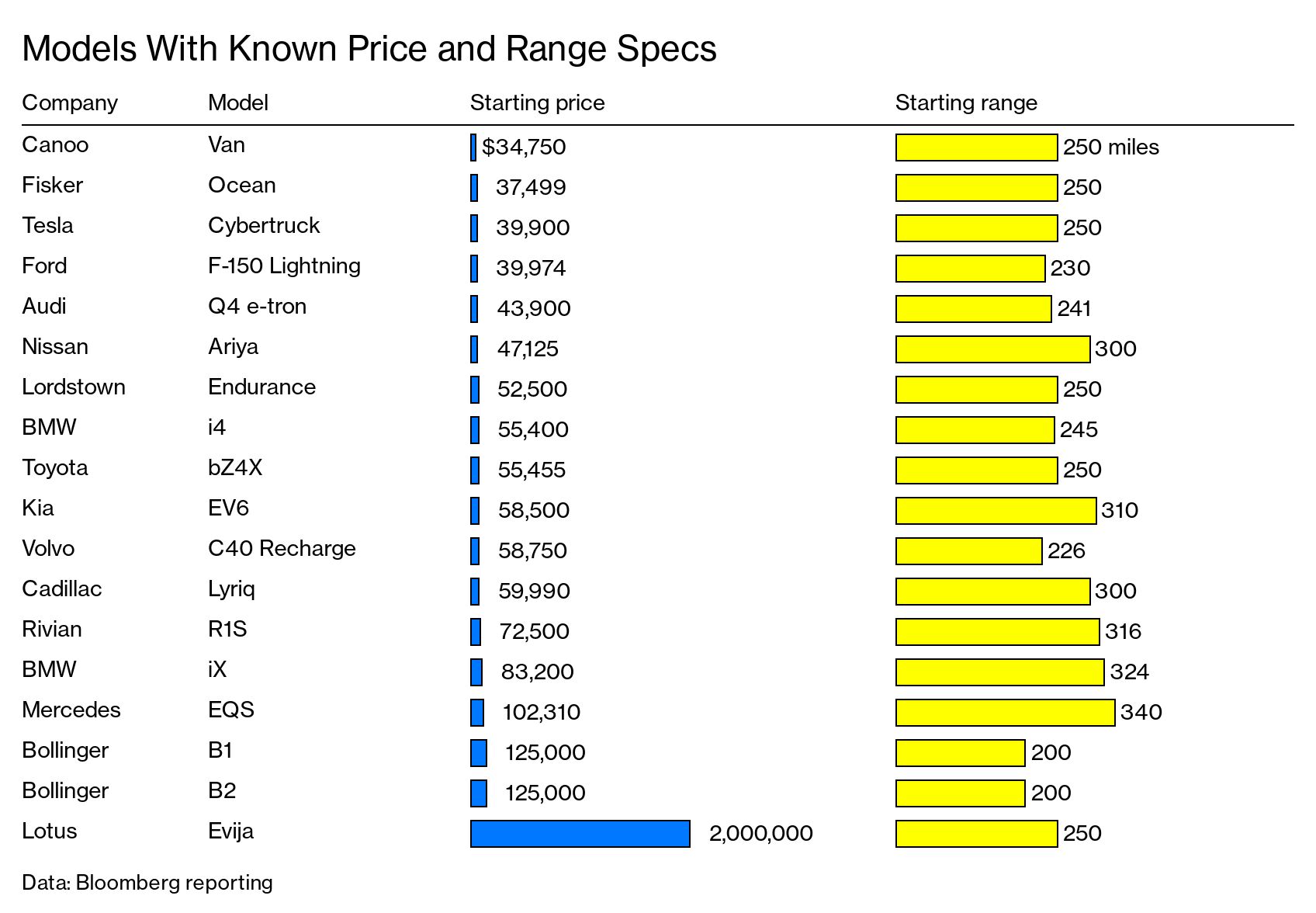
"This year, the U.S. market is about to see its options for electric vehicles more than double. Thirty entirely new models are poised to hit the streets, according to researcher IHS Markit, mostly created by luxury brands such as Cadillac, Lincoln, and Polestar. And unlike most of the EV standard-bearers to date, the next generation will arrive in the size Americans tend to like: extra large."


Apparently, the new models "include at least 14 SUVs, a van, and four pickups," the most notable of which is "a battery-powered version of Ford's F-150, the country's bestselling vehicle for decades." Given the expanded range of options and increasing comfort that consumers seem to have with the growing range of batteries, sales are expected to increase in proportion. The only constraint, it seems, is going to be the ability of the global supply chain to deliver these vehicles to market:


"IHS estimates that 1 in 20 American buyers this year will pick a fully electric vehicle—almost 1 million machines—if the supplies hold out. 'It's going to be a matter of what can be built,' says analyst Michael Fiske, 'not what can be sold.'"


The chart accompanying the article illustrates those known models due to come to market, along with the driving range on a full battery:


https://assets.bwbx.io/images/users/iqjWHBFdfxIU/ifEpT.XXuJ3U/v0/pidjEfPlU1QWZop3vfGKsrX.ke8XuWirGYh1PKgEw44kE/-1x-1.png


Take care
David

David Chandler
© Sage Publications, 2020

Instructor Teaching and Student Study Site: https://study.sagepub.com/chandler5e 
Strategic CSR Simulation: http://www.strategiccsrsim.com/
The library of CSR Newsletters are archived at: https://strategiccsr-sage.blogspot.com/


America's Electriv Vehilce Selection is About to Get a Lot Wider
By Kyle Stock and Dorothy Gambrell
January 15, 2022
Bloomberg
 

Tuesday, May 4, 2021

Strategic CSR - EVs

I was always aware that simple statements around the 'obvious benefits' of electrical vehicles (EVs) were obscuring a much more complex reality (where EVs are ultimately more beneficial for the environment, but not immediately so). The interactive article in the url below provides some data to support that position:

"Carmakers including General Motors Co. and Volkswagen AG are retooling their companies to make electric vehicles on the premise that their battery-powered motors are cleaner than gas-burning engines. Are EVs really better for the environment, though? A close look at all the factors shows they are—but it's a complex answer with some asterisks."

In order to answer this question, there are a number of factors that need to be taken into account:

"The environmental cost of a car includes both building it and fueling it. That means factoring in emissions associated with oil drilling and power plant smokestacks, as well as from mining metals such as nickel and cobalt that are needed for electric-car batteries."

In short, right off the production line:

"Building both a Tesla Model 3 and a Toyota RAV4 generates several tons of greenhouse gas emissions to smelt the aluminum, manufacture the components and assemble the vehicle. But building a Tesla actually generates more emissions because of the metals needed for its lithium-ion battery. Before it rolls off the assembly line, the Tesla has generated 65% more emissions than the RAV4."

After a few thousand miles, however, the Tesla begins to catch-up:

"The RAV4 burns gasoline, which is refined from crude oil extracted from wells around the world. At 5,000 miles, the RAV4 also needs its first motor oil change. The Tesla refills with electricity, and doesn't need motor oil changes. Generating electricity creates emissions, but the U.S. grid is getting cleaner each year, burning less coal and using more renewables and natural gas."

The study concludes that it is only after being driven for 20,600 miles that the Tesla becomes the more sustainable option:

"For every mile driven, generating the electricity for the Tesla emits 34% of the emissions associated with making and burning the gasoline consumed in the RAV4 engine. At 20,600 miles, the greenhouse gas emissions from building and driving the two cars are roughly the same. … Then the Tesla pulls ahead."

Finally, after what the article refers to as "the lifespan of a typical car," the Tesla far outshines the RAV4:

"By the time we get to 200,000 miles, ... Building and operating the RAV4 has generated 78 tons of greenhouse gases. The Model 3 has generated less than half: 36 tons. The Model 3 also comes out ahead in Consumer Reports's total cost of ownership, at $49,800 to $51,000."


So, according to this study, the Tesla is not only the overall better environmental option than the RAV4, but is also more cost-effective. Presumably, this comparison would be even more favorable for the Tesla if the other car was larger and heavier than a RAV4. The study also goes on to examine what would happen in four different scenarios in terms of the speed in which that transition occurs for all cars currently on U.S. roads ("more than 280 million light-duty vehicles"). Perhaps not surprisingly, the most effective results come when multiple complementary policy changes are made with the common goal of reducing our carbon footprint:


"No matter what kind of engines they run on, cars add to greenhouse gas emissions. But the data show that switching from gas to electric vehicles will make a huge impact. Consumers making individual choices between cars will make a difference. So will policy decisions made by governments and investments by companies as we drive into the future."


Take care

David


David Chandler

Strategic Corporate Social Responsibility: Sustainable Value Creation (5e)

© Sage Publications, 2020


Instructor Teaching and Student Study Site: https://study.sagepub.com/chandler5e 

Strategic CSR Simulation: http://www.strategiccsrsim.com/

The library of CSR Newsletters are archived at: https://strategiccsr-sage.blogspot.com/


Are Electric Cars Better for the Environment?

By Russell Gold, Jessica Kuronen and Elbert Wang

March 23, 2021

The Wall Street Journal

Late Edition – Final

A8

https://www.wsj.com/graphics/are-electric-cars-really-better-for-the-environment/